
The Pentagon spent $93 billion in a single month on lobster tails, king crab, ribeye steak, and a Steinway grand piano
The Pentagon calls this "use it or lose it." The idea is that if you don't spend your budget before the fiscal year ends, Congress cuts it next year. So you spend.



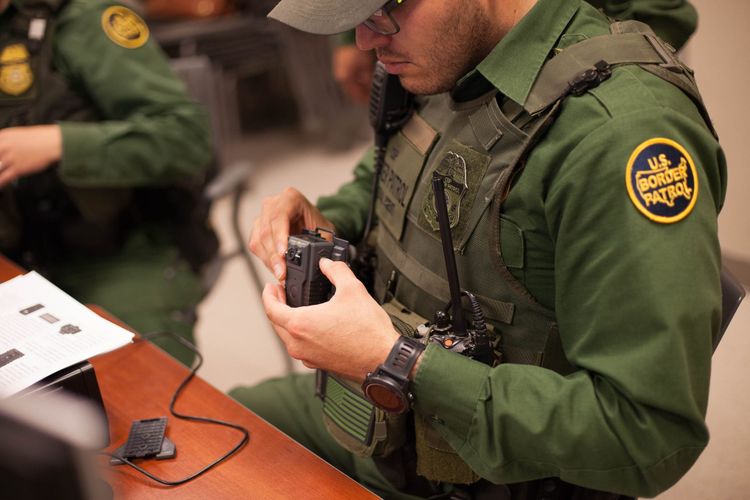
Last September, the Pentagon burned through $93.4 billion in a single month. According to a government watchdog report, the spending included $6.9 million on lobster tails, $2 million on Alaskan king crab, $15 million on ribeye steak, and — for reasons that remain genuinely unclear — a $100,000 Steinway grand piano for the Air Force chief of staff's residence. The Pentagon calls this "use it or lose it." The idea is that if you don't spend your budget before the fiscal year ends, Congress cuts it next year. So you spend.
This is how the American defense apparatus actually works. Not in the headlines about strategy and geopolitics, but in the mechanics underneath — the contracts, the incentives, the bureaucratic logic that produces surf-and-turf spreads for a department publicly committed to government efficiency.
That's the kind of story we want to tell.
This week, Marquette University's O'Brien Fellowship in Public Service Journalism announced its 2026-27 class. I'm honored to be one of them.
Over the next year, I'll be working with Sharon Weinberger — until recently the national security and foreign policy editor at the Wall Street Journal, and the author of The Imagineers of War, a book about DARPA — on a new investigative reporting and podcast project called The Signal Ledger.
The broad idea: we want to understand the machinery of modern power. Not wars themselves, but the ecosystems around them. The money. The contractors. The consultants. The technologies. The incentives. The strange revolving doors between government, law enforcement, intelligence agencies, venture capital, Silicon Valley, defense firms, and politics. The places where local police departments start behaving like intelligence agencies. The places where startup culture collides with defense contracting. The way war becomes content. The way "national security" becomes a brand.
Who profits from fear? Who benefits from permanent crisis?
Some of this grows out of work I've already done. My book Thin Blue Lie examined the private industry built around law enforcement — the weapons, the technology, the training conferences, the lobbying, the PR. Reporting projects like Heat List looked at predictive policing and surveillance, and how technological systems quietly reshape people's lives while remaining largely invisible to the public.
But The Signal Ledger is wider than that. We're interested in the connective tissue between systems — and in finding the specific, concrete, provable stories that make those systems visible.
Which is where you come in.
What stories do you think are being missed right now? What companies, personalities, technologies, or institutions deserve more scrutiny? What aspects of defense spending, surveillance, policing, or political influence seem underreported? What confuses you?
That last question is serious. Confusion is a good reporting instinct. If something seems intentionally opaque, jargon-filled, or weirdly difficult to explain plainly, there's usually a reason.
Follow along here at Amphibian Media. Sign up for the newsletter. Send tips, questions, rabbit holes, strange PDFs, corporate filings, niche conference brochures. Send the weird thing you noticed that nobody else seems interested in yet.
Some of the best reporting starts with somebody quietly saying: this doesn't add up.
That's usually where we start too.
Sign up for new work, reporting notes, show updates, and the useful parts of the process.