
DEAD RECKONING: Reno is quitting Flock. The cameras are staying.
Reno’s surveillance fight ends in a conditional $21.8 million Axon deal. Plus: a heat ray for border testing, police warnings about public meetings, and the money Oklahoma expects to make from immigration detention.



The replacement comes with conditions: read the exit clause.
If you want to know what it means for a city to quit Flock, watch Reno.
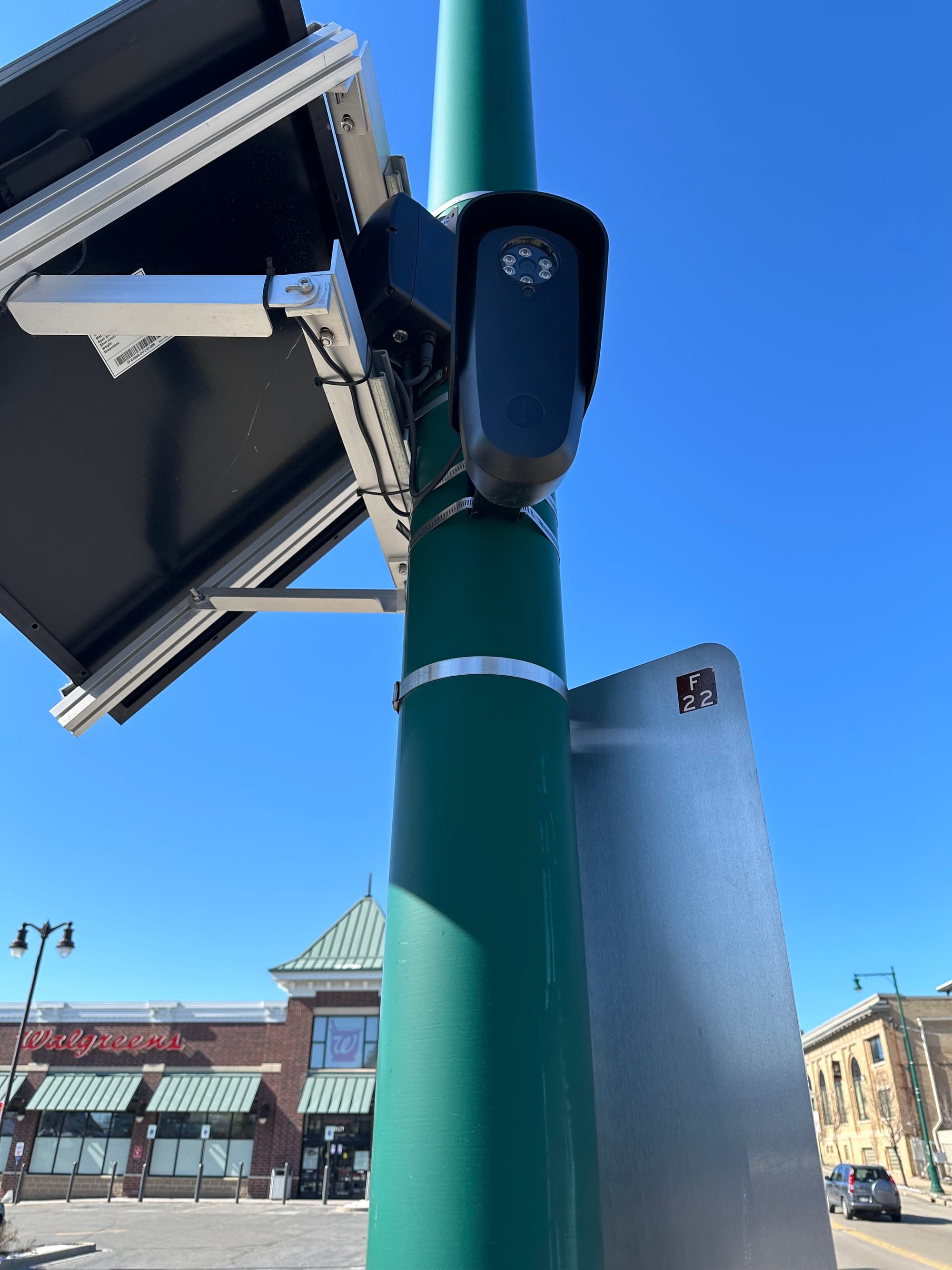
On Wednesday, the City Council voted 5-2 to approve an eight-year, $21.8 million Axon agreement to replace its Flock license plate readers. Most of the package is equipment Reno police already get from Axon, including body cameras, Tasers, in-car cameras, and evidence storage. The new pieces are plate readers, drones that can reach a call before officers do, and software that drafts police reports from body camera audio. Reno decided not to renew Flock. It still wants to track cars. Sparks, next door, approved a switch from Flock to Axon in June.
I’m interested in what residents gain when a city cancels one of these contracts. Some want fewer cameras. Some want federal agencies kept out of the database. Some want to know who has been searching their movements and why. A new vendor could satisfy some of that. The cancellation alone tells us very little. Of the 79 written comments the council received, 71 opposed the Axon deal anyway.
The council approved the deal with an amendment from Councilmember Devon Reese. It cuts the time Reno keeps plate data not tied to an investigation from 30 days, the current police policy, to 15. The conditions require audits of access logs, data sharing, and potential misuse. It lets the city exit the contract on 30 days’ notice without paying a penalty. Axon still has to sign off. If it doesn’t, the city attorney’s office says the deal goes back to the council.
I’d want to read the signed contract before I believed much of this, and then the first audit. Did the auditors check who searched for which plates and why, or did they count searches and stop there? Somebody also has to decide when misuse is bad enough to cancel over. If Reno does cancel, it’ll need its records back from Axon, and I haven’t seen how that would work.
In principles published in September, 13 law enforcement organizations say every plate-reader search should be tied to a law-enforcement or public-safety purpose. One of them is the International Association of Chiefs of Police. The principles call for routine audits and say access should be “promptly removed when an individual’s duties no longer require it.” The groups oppose deleting data after “an arbitrarily short time period” but don’t define one.
A department can endorse all those principles and follow none. The records will show which. Reno has given residents a list of specific things to ask for, and the next story worth writing is about what they get.
The Reckoning: who gets watched, who gets heard.
§§§ Former officers retained Flock access, sometimes tracking romantic partners, The Washington Post found. Leaving the department did not always end the surveillance.
§§§ A crowded council meeting made the threat bulletin. Jason Koebler obtained a July warning from Orange County’s intelligence fusion center about meetings concerning Flock. It identified no specific credible threats, but listed media attendance and emotional confrontations among possible public-safety risks. The bulletin also acknowledged people’s constitutional rights. Apparently, exercising them requires significant operational planning.
§§§ DHS has permission to test a military heat ray. A September memo CNN obtained authorizes a seven-month loan of the Active Denial System for potential border use, as PEOPLE reports. DHS would develop the operating tactics. This is permission to test, not confirmation of deployment against migrants. Before deployment, the department owes the public an explanation of where people should go when the beam makes them flee.
§§§ A nurse practitioner says protecting patient information cost him his phone. Muhammad Numaan Imam and Khadijah Mansoor allege that CBP seized their two phones and two laptops at Dulles on Oct. 16 after Imam declined to unlock a device holding confidential patient data. Their lawyers filed a motion on Oct. 20 to return the devices. The allegations await judicial resolution; the filing also seeks an accounting of any copied data.
§§§ Pennsylvania’s House moved to regulate plate readers. HB 2771 passed 190–13 on Oct. 19. Whitney Downard reports that the proposal would restrict searches and put ownership of captured data with local agencies. It still needs further action to become law. The large House majority encourages its supporters; it doesn’t resolve the fight over which uses the final legislation would permit.
§§§ Chicago has announced another gunshot-detection trial. Who gets the business? Heather Cherone reports plans for tests in six police districts, but the city didn’t give WTTW details about the system. Brandon Johnson subsequently told ABC7 that multiple companies could participate. Neither report identifies a selected vendor. That’s a fairly basic missing detail for a program intended to establish which technology works.
§§§ Emiliano Andrade-Covarrubias, 56, died in ICE detention in Laredo. The Texas Tribune reports that staff found him unresponsive on Oct. 17. His daughter says he had struggled to obtain medication and medical attention. Those allegations do not establish a cause of death. GEO Group, which operates the facility, referred questions to ICE; DHS had not responded by the story’s update.
§§§ Still worth following: the legal memo behind the boat strikes. The ACLU’s ongoing records case seeks the Office of Legal Counsel opinion that reportedly justifies the attacks and purports to protect participants from prosecution. This is an older case, not a lawsuit filed this week. Its central question remains useful: what legal reasoning does the government rely on when it kills people it suspects of smuggling drugs?

Follow the Money: the price of keeping things running.
$$$ JPMorgan says it has put $5 billion of equity into national-security-related industries, Reuters reports. It separately says it financed or facilitated more than $230 billion in transactions under the broader initiative. Those figures measure different things; neither means the bank bought $230 billion of defense-company shares. Its investments span manufacturing, energy, supply chains and defense technology. Watch which businesses get ownership capital and which get financing.
$$$ Oklahoma expects to get paid to oversee a private immigration prison. The Frontier reports that CoreCivic projected about $100 million in annual revenue from Diamondback once fully activated. Oklahoma’s corrections department stands to receive nearly $10 million annually for monitoring and administration. The agency wouldn’t explain its oversight duties. CoreCivic says it complies with applicable requirements. These are expected revenues, not profit figures or confirmed receipts; a state official said in September that ICE hadn’t paid either party since April.
$$$ Treasury wants more control over where American investment goes. A proposal announced Thursday would expand restrictions on sensitive technology investments in China and other countries to include hypersonics, supercomputing and biotechnology. It remains a proposed rule, with public comment ahead. For companies raising money in those fields, the financing question increasingly includes where the recipient operates and what military capabilities the investment could help build.

People to Watch: who can slow this down?
◉◉◉ Laurent Gisel, who leads the ICRC’s legal work on warfare, told Matthew Gault that faster AI-assisted targeting can also accelerate mistakes and weaken human scrutiny. The organization is calling for negotiations on binding rules for autonomous weapons, including prohibitions on unpredictable systems and those targeting people. Watch November’s Convention on Certain Conventional Weapons review conference: agreeing to negotiate would be a concrete step; expressions of concern alone won’t constrain a weapon.
◉◉◉ Chinmayi Sharma asks what happens when immigration enforcement runs through too many databases, contracts and vendors for anyone to shut it down with one decision. Her Lawfare essay offers a useful way to think about a canceled contract: copied records and other suppliers can keep the underlying operation going. For reporters and organizers, the follow-up is practical. Trace what happens to the data after the contract ends.
By the Numbers: count the conditions, too.
### 15 days: Reno’s proposed retention limit for plate data unrelated to investigations. That is down from 30 days under department policy. Axon must accept the council’s conditions.
### 190–13: The Pennsylvania House’s Oct. 19 vote to advance HB 2771, regulating automated license plate readers. Passage in one chamber does not make it law.
### More than 70 states: The number explicitly supporting negotiations on an autonomous-weapons instrument, according to the ICRC’s First Committee statement. Support for negotiations is an opening, not a completed treaty.

Before You Go: a source with an agenda. Imagine that.
Philip Di Salvo interviewed 10 journalists who work with hacked data. One described the necessary skepticism as “treating every dataset as if it has chlamydia.” A memorable standard, if a difficult one to put in an employee handbook. The broader point is useful: authentic documents can arrive from people trying to manipulate you. Verify the material, ask why someone wants it published, and tell readers what you still don’t know. A source’s agenda deserves scrutiny. So does the evidence.
Thanks for reading. If someone comes to mind as you read this, please forward it along. More reporting is at amphibian.media. Send tips, questions, arguments, and things I should be reading to matt AT amphibian DOT media.
Kindly,
Matt
Sign up for new work, reporting notes, show updates, and the useful parts of the process.