
Dead Reckoning: A newsletter about war, policing, power, and public money
Where does public money really go? Dead Reckoning investigates the businesses, technologies and political decisions shaping war, policing, surveillance and the future they're building.


We follow public money to see where we're headed.
Every dollar a government spends is also a prediction. A defense contract, a surveillance system, a border wall, a police technology purchase, an artificial intelligence program, a prison expansion, a weapons platform: each one is a bet that someone believes will make us safer, and that someone else expects to profit from.
Dead Reckoning follows those bets.
This publication investigates the businesses, investors, contractors, lobbyists, technologies and political decisions shaping war, policing, surveillance, incarceration and national security. Some stories start with a Pentagon budget line. Some start with a police department buying drones. Some start with a company almost nobody has heard of.
The goal is the same each time: follow the money, understand the incentives and measure what the decisions produce.
The name comes from navigation. Dead reckoning is how you estimate your position using only the information you already have, when there's no reliable external reference. Budgets forecast priorities. Contracts predict the future. Investments shape what comes next. We read those signals and ask where they're taking us.
Subscribers receive:
- Original investigative reporting
- Weekly analysis connecting stories across defense, policing, surveillance and government spending
- Interviews with journalists, researchers, technologists and policymakers
- Document-driven explainers that unpack complex systems without the jargon
- Early access to podcast episodes and reporting projects
- Reporting notes and source documents
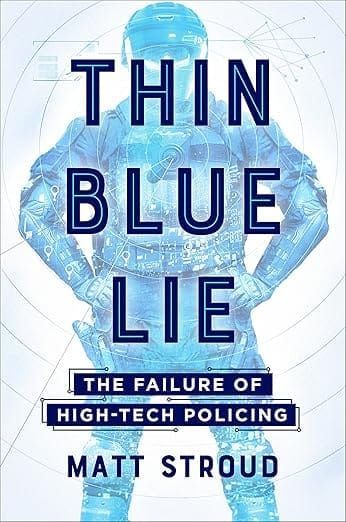
Dead Reckoning is produced by investigative journalist Matt Stroud, author of Thin Blue Lie: The Failure of High-Tech Policing and a reporter for The Verge, Bloomberg News and the Associated Press. His work has covered predictive policing, surveillance technology, criminal justice and the private industries that shape public policy.
Membership is $12 a month or $120 a year.
Investigative reporting is expensive. It takes time to obtain records, analyze data, travel, interview sources and follow stories after they've dropped out of the headlines. A subscription funds that work directly and keeps the publication independent.
Sign up for new work, reporting notes, show updates, and the useful parts of the process.