
Chris Morris broke television news in 1994 and nobody noticed
In January 1994, Chris Morris and Armando Iannucci aired six episodes of a BBC2 series called The Day Today and broke something in British television that has never quite been fixed.


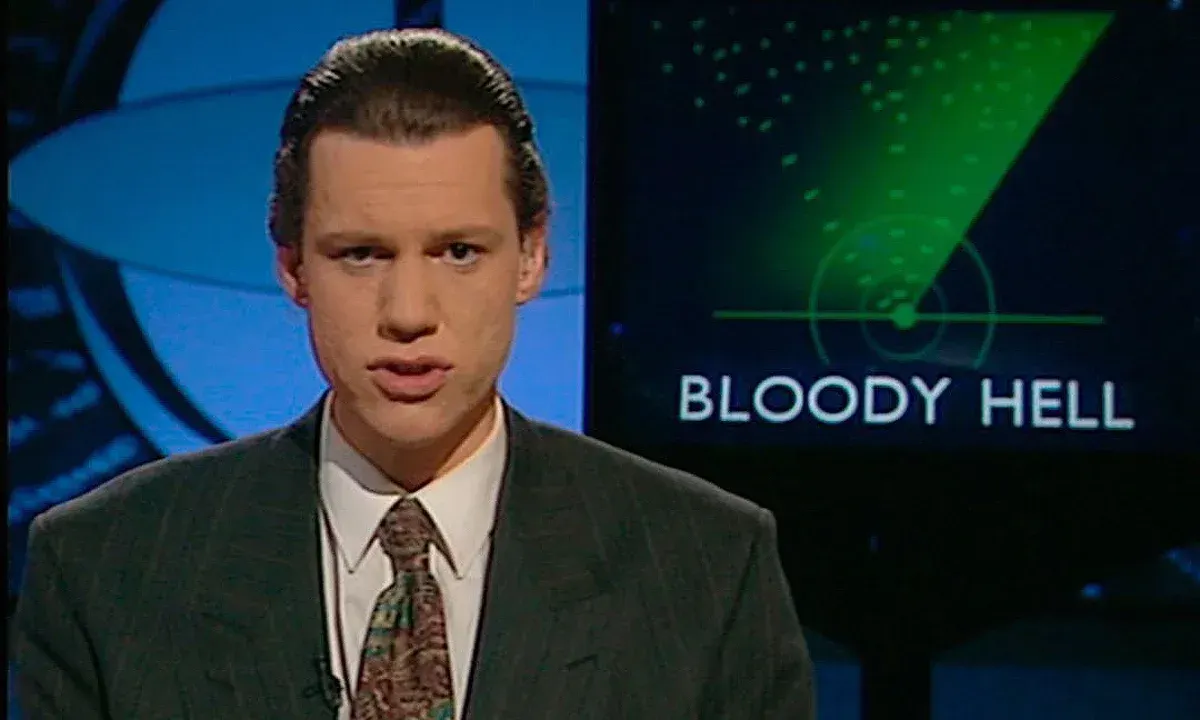
In January 1994, Chris Morris and Armando Iannucci aired six episodes of a BBC2 series called The Day Today and broke something in British television that has never quite been fixed.
The show started as a TV adaptation of their BBC Radio 4 program On the Hour. Morris played the anchor — aggressive, self-important, perpetually on the edge of starting an international incident. Picture a network anchor so convinced of his own importance that he'd interrupt a breaking news segment to correct a guest's grammar, then stare into the camera like he'd done the public a favor. The show also introduced Steve Coogan's Alan Partridge, who appeared as a sports correspondent who knew almost nothing about sport of any kind.
Here's some hard-nosed economic reporting from correspondent Peter O'Hanraha-hanrahan:
Morris and Iannucci built the show to be accurate enough to sting. They hired the actual graphics team from News at Ten. They took BBC news training courses. They studied how real producers cut footage. The absurdity landed harder because the packaging looked exactly like the thing being mocked.
The correspondents did the real damage. Collaterlie Sisters, the business reporter, filled airtime with phrases like "Trading remained succulent for the rest of the day." The weather forecaster appeared as a floating disembodied head. And Peter O'Hanraha-hanrahan — the economic correspondent, played by Patrick Marber — was visibly, catastrophically incompetent on every assignment, which is why he kept getting sent on assignments.
He is one of the funniest characters in the history of television news satire. I'm not being dramatic.
What Morris understood — and what made the show genuinely dangerous rather than just funny — was that television news had already rotted from the inside. Anchors performed authority they hadn't earned. Correspondents filed reports that explained nothing. Graphics and music and production values substituted for information. Morris saw all of this in 1994 and built a funhouse mirror out of it.
Watch cable news today and you'll see how right he was. Nobody interrupts anybody on cable news anymore, because all the guests agree with the host. Nobody pushes back on network news, because the correspondents are afraid of losing access. The adversarial energy Morris satirized — the anchor who treated every guest like a hostile witness — disappeared almost entirely, replaced by a kind of coordinated performance where everyone pretends to be angrier or more certain than they actually are. The problems Morris identified thirty years ago didn't get fixed. They metastasized.
After The Day Today ended, Morris took the format to Channel 4 and sharpened it into Brass Eye. Same structure, darker edges. The show's most famous bit involved a fictional drug called Cake — supposedly imported from Prague, with an active ingredient described as "dimesmeric andersonphosphate" that stimulated "the part of the brain called Shatner's Bassoon." Celebrities including Noel Edmonds went on camera to warn the British public. A Conservative MP named David Amess took his concerns about Cake to the floor of the House of Commons. Morris had fooled them completely, and then aired the footage.
The Daily Show did something vaguely similar but pulled its punches. Jon Stewart and his successors pointed at hypocrisy and got laughs, but they fundamentally wanted the audience to feel good at the end. Morris didn't care about that. In the Brass Eye episode on social decline, reporter Ted Maul described a fictional pop song as having "caused more stink than a bomb in one of those holes in the ground at a rock festival that everybody shits in." That line only works if the writer has studied broadcast journalism seriously enough to understand exactly what he's destroying.
That's what I keep returning to. The Day Today holds up because Morris and Iannucci respected the thing they were mocking. They understood what journalism was supposed to do. They cared about the gap between what it promised and what it delivered. That care is what made the satire accurate, and accuracy is what made it last.
Most of it is on YouTube. Start with Peter O'Hanraha-hanrahan. You'll figure out the rest.
Sign up for new work, reporting notes, show updates, and the useful parts of the process.