
Thin Blue Lie: The Failure of High-Tech Policing
Buy it at Macmillan.
Buy it at Amazon.
Thin Blue Lie is a reporting-driven examination of how American policing quietly remade itself around data, technology, and risk prediction—and how those systems failed long before the public noticed.
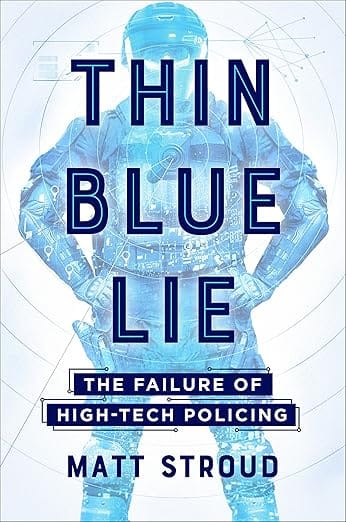
Drawing on years of field reporting, internal documents, and interviews with police officers, technologists, and policymakers, Thin Blue Lie shows how tools sold as neutral, objective, and scientific often magnified old biases, blurred accountability, and shifted responsibility away from human decision-makers. Rather than focusing on individual bad actors, it traces how incentives, grants, procurement rules, and vendor promises reshaped policing from the inside out, creating systems that were difficult to question, audit, or unwind once deployed.
Although the book was written before today’s explosion of AI, predictive analytics, and automated decision-making, its core arguments have only grown more relevant. Cities across the country are still grappling with the consequences of algorithmic policing, surveillance expansion, and technology-first reforms that promised efficiency but delivered new forms of opacity and risk.
Thin Blue Lie offers a framework for understanding these debates not as sudden crises, but as the predictable outcome of choices made years earlier—about how power is delegated, how technology is trusted, and how accountability quietly erodes inside complex institutions. It’s a book for readers who want to understand how we got here—and why these systems keep repeating the same mistakes.
If you have any interest whatsoever in how corporations make untold riches through military and policing contracts, then I recommend that you buy my book here through its publisher, or on Amazon if that's your thing.