
After the Post-Gazette: Pittsburgh’s Journalism Problem Is Structural, Not Existential

Watch a haphazard episode of the Amphibian Happy Ahr discussing this column here.
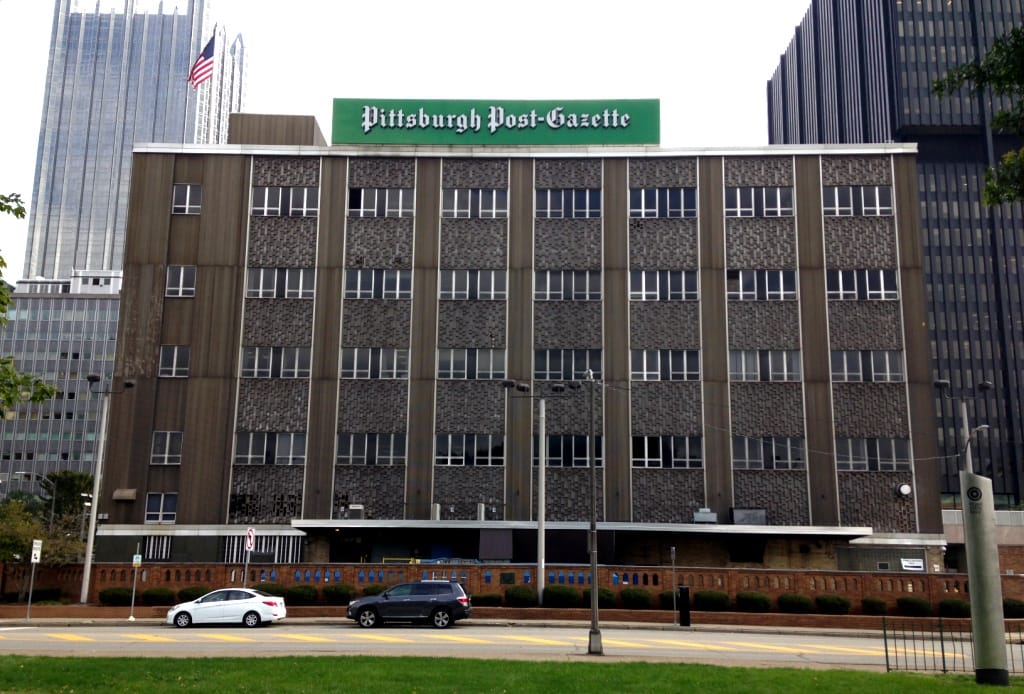
When the Pittsburgh Post-Gazette announced it would cease operations this spring, the first question everyone asked was the wrong one.
“Who replaces it?”
That question assumes a newspaper is a personality. Or a brand. Or a vibe. It isn’t. A metro daily is infrastructure. It is a set of routines that make a city legible to itself. Courts. Council. Schools. Public agencies. The slow, unglamorous work of telling people what happened today—and why it matters tomorrow.
In the video I just published, I talked through this moment with my intern, Gavin Petrone, who attended a public panel on the future of Pittsburgh journalism at the Heinz History Center. What stood out wasn’t despair. It was a strange, cautious optimism. Not because anyone thinks losing a daily paper is fine—but because Pittsburgh is already doing something unusual: it has built a dense ecosystem of nonprofit and niche outlets that do serious work.
What Pittsburgh does not have is a spine.
Right now, there are dozens of organizations producing journalism in this city. Some focus on accountability. Some on neighborhoods. Some on culture. Some on public media. Almost all of them are small. Almost all of them are grant-dependent. Almost all of them are operating at the edge of sustainability.
That ecosystem is not nothing. It is real capacity. But it is not a substitute for a daily metro operation. Not because the people aren’t talented. Because no one organization is structurally responsible for the boring, relentless coverage a city needs every single day.
At the panel, one publisher put it bluntly when asked whether his outlet could absorb the loss of the Post-Gazette’s basic civic functions. No obituaries. No box scores. That wasn’t evasive. It was honest. Specialty outlets don’t become general-interest newspapers by accident.
Another panelist described the Post-Gazette’s closure as watching a “chronically ill loved one” finally slip away. That line stuck with me because it captured something uncomfortable: this didn’t happen suddenly. It happened after years of labor conflict, ownership decisions, and court rulings that hollowed out trust and capacity long before the end date was announced.
The real question, then, is not whether Pittsburgh has journalism. It does. The question is whether Pittsburgh can organize it.
One idea that kept resurfacing—in different language—was the need for a shared backbone: a central operation responsible for daily civic coverage, while existing outlets continue doing enterprise and specialty work. Think less “new paper” and more “shared infrastructure.” Salaries. Benefits. Editors. Business staff. Clear rules. Clear transparency.
That last part matters more than people like to admit. As journalism becomes more dependent on philanthropy and institutions, trust depends on visibility. Who pays for what. Who decides coverage priorities. Who gets hired. Who gets funded. If Pittsburgh is going to build something new out of what already exists, it cannot be opaque or vibes-based. It has to be legible to the public it claims to serve.
Point Park University comes up often in these conversations, and for good reason. It already acts as a hub for journalism training and collaboration. But housing a civic spine anywhere—especially inside a larger institution—would require sharper financial and editorial transparency than currently exists. If this is meant to be civic infrastructure, the books and the rules have to be visible.
So what comes next?
In the coming weeks, I want to get more specific. I want to track down the data that panelists referenced about foundation funding for journalism in the region. I want to talk directly with journalists who were displaced when earlier papers closed and understand the long-term consequences. I want to press on the labor question—because a journalism system that cannot offer stability is not a system that lasts.
May 3 is not the end of journalism in Pittsburgh. But it is a deadline. After that date, the city will find out whether it can coordinate power without a monopoly—or whether it is content to keep doing excellent work in fragments, while the daily work goes undone.
That is the real story now.